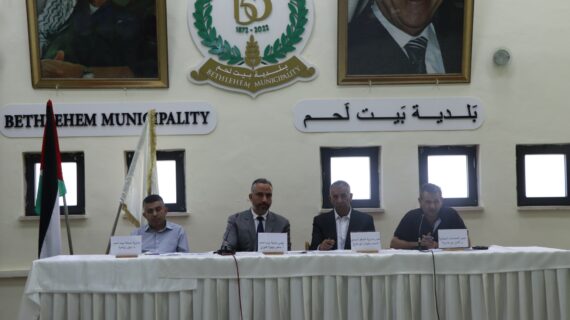
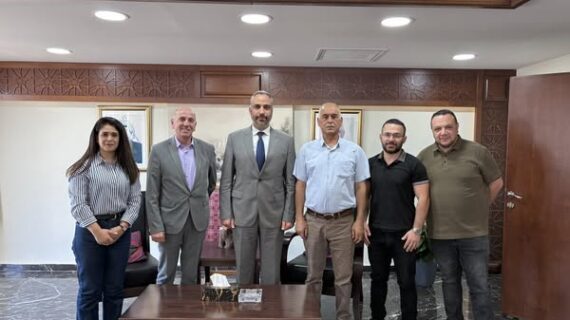
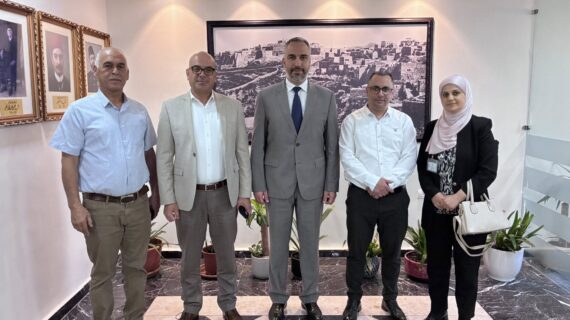
On Wednesday, June 18, 2025, the Bethlehem Municipality organized a workshop titled “Dealing with the Phenomenon of Stray Dogs and the Spread of Rats and Ways to Reduce Them.” The workshop was held at the municipality’s headquarters. The workshop was attended by the Director General of the Local Government Directorate, a number of mayors and local councils, representatives of governmental and civil society organizations, and popular committees. It also included relevant authorities from the Ministry of Health and the Veterinary Services Department of the Ministry of Agriculture, media representatives, and several members of the municipal council. This workshop was held as part of the municipality’s efforts to discuss the growing challenges resulting from the spread of stray dogs and rats and propose sustainable mechanisms to address them, enhancing public health and community safety. The meeting began with a moment of silence in honor of the martyrs. The Mayor of Bethlehem, Mr. Maher Nicola Canawati, then delivered a speech in which he emphasized that confronting these phenomena cannot be achieved through traditional methods, but rather requires civilized and humane solutions that reflect Bethlehem’s status as a cultural and tourist city. He considered this meeting a starting point towards achieving tangible results on the ground, emphasizing the need to develop a clear implementation plan to address these phenomena. He also emphasized that this responsibility does not fall solely on municipalities, but rather is a collective one that requires the intervention and participation of all relevant parties. He expressed his hope that this issue would witness serious engagement and effective cooperation from all partners.
The Director of the Municipality’s Health Department, Dr. Yousef Musallam, gave a detailed presentation on the reality of the phenomenon, emphasizing that the law holds local authorities responsible for dealing with stray dogs. He pointed to the daily complaints received regarding bite incidents and the spread of diseases, especially after the recording of cases of rabies. He emphasized the importance of coordination with animal welfare associations to reach systematic and practical solutions.
For his part, the Director General of Veterinary Services in the Bethlehem Governorate, Mr. Kamel Abu Amria, explained that the problem is chronic and has been exacerbated by the absence of a clear national plan. He called for the establishment of a central shelter for dogs under the supervision of the relevant authorities, with the necessary funding provided by donor institutions.
Dr. Nabil Zawahra, Head of the Preventive Medicine Department at the Bethlehem Health Directorate, discussed the health and psychological dimensions of the stray dog phenomenon, highlighting the seriousness of their bites to public health, especially among children. He emphasized that the absence of radical solutions has contributed to the worsening situation.
For his part, the Director General of Local Government in Bethlehem, Mr. Suleiman Abu Mufreh, emphasized the importance of developing a clear and implementable national strategy to address the phenomenon, emphasizing that financial constraints will not constitute an obstacle to implementing the required solutions. He also expressed the directorate’s readiness to provide full support to municipalities in taking the necessary measures to protect citizens, highlighting the pivotal role played by local authorities in this context.
For her part, Ms. Diana Al-Baabish, President of the Animal and Environment Society, emphasized the importance of building a true partnership between official institutions and civil society. She noted that her association provides medical care to injured dogs, but that it cannot address the mounting challenges alone. She called for the enactment of legislation and the implementation of effective programs in cooperation with municipalities. She then presented a comprehensive plan to combat stray dogs, which aims to protect citizens, promote public health, and reduce zoonotic diseases, while adhering to humane standards. The plan includes implementing a “Trap, Neuter, Vaccine, Release” (TNR) program, establishing temporary shelters, organizing awareness campaigns, and signing partnerships with relevant entities. The cost of the first phase of the plan is estimated at NIS 310,000, extending over six months. It includes field equipment, specialized teams, and periodic monitoring to ensure effectiveness and sustainability.
At the end of the meeting, a discussion was opened among the attendees, with the Municipal Council members and participants emphasizing the need to address the stray dog and rat populations comprehensively and effectively. They emphasized that violence is not a solution and that the problem requires a clear implementation plan and cooperation from all parties. The importance of improving waste management and using closed containers to limit the spread of rats was also emphasized. The meeting concluded with an agreement to form a subcommittee from municipalities and the Health Directorate to develop an urgent and comprehensive plan to address these issues.